

Introduction
Warming a baby’s bottle safely is much simpler than it can sometimes feel in the moment; warm it gently only if needed and avoid any method that can create hot spots.
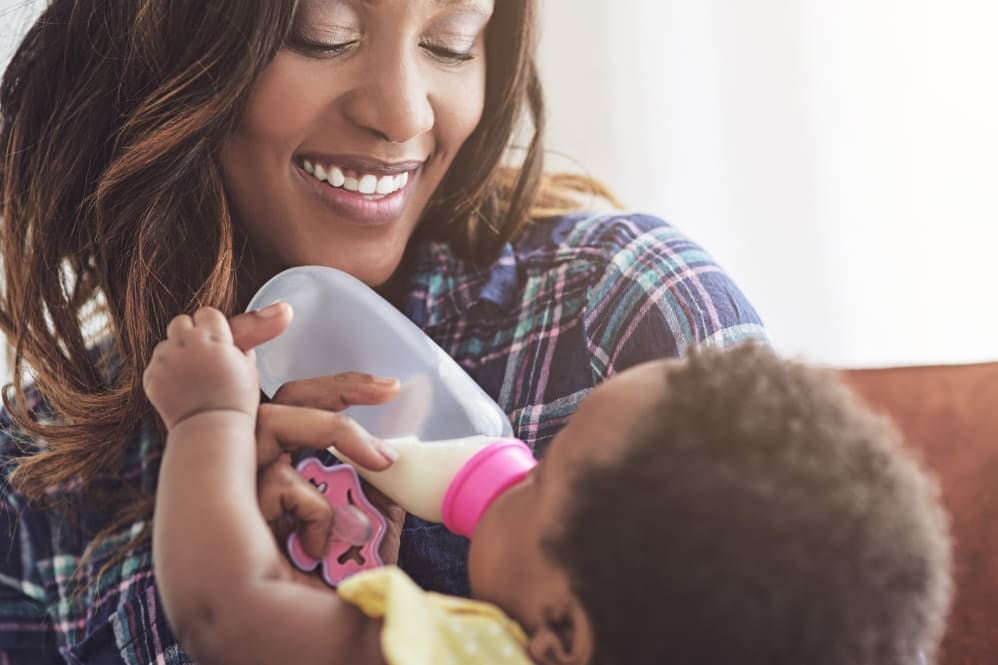
Many parents assume baby bottles have to be warm for your little one to take it well, but that is not the case. Some babies are happy with milk at room temperature, while others prefer it slightly warmed to body temperature. What matters most is that each feed is made fresh, using clean sterilised equipment and bottles for infants, following the step-by-step preparation guidance on pack and available on the HSE website.
Why some warming methods are unsafe
The main method to avoid is the microwave. Microwaves heat milk unevenly. That means the baby bottle might feel fine on the outside while still having hot spots inside. Those hot spots can burn your little one’s mouth, even if the bottle does not feel too hot in your hand.
That is also why you should never try to “rescue” a feed that has cooled down or has been sitting out. So, if you’re wondering “can you reheat formula milk?” the rule is, if a bottle has already been started, it should not be kept for later use. If it has been left standing, make a fresh one instead.
For more information on how long formula milk lasts and how to safely store baby formula, check out SMA’s guidance for every scenario.
How to check the temperature of formula milk
The simplest check is still the best one. Put a few drops of milk on the inside of your wrist. The formula milk should be at body temperature, which will feel lukewarm, not hot to your touch. If it feels hot to you, it is too hot for your baby.
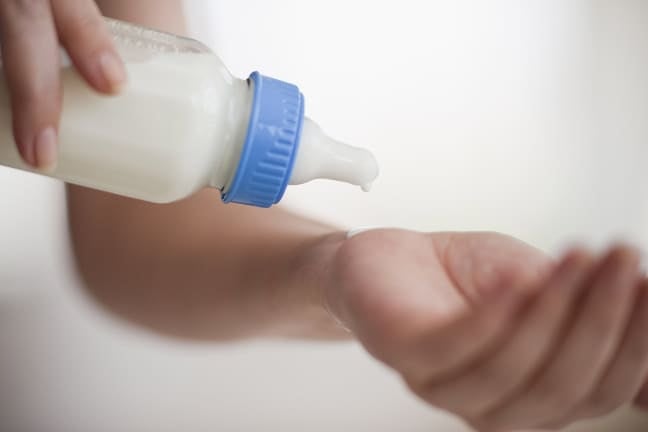
This is one of those moments when parents can end up worrying more than they need to. Safe feeding is not about getting the temperature “perfect”. It is about making sure the milk is not too hot. However, a thermometer can feel reassuring if you prefer a more exact check.
Quick check before you feed:
- Make every formula milk feed fresh
- Warm gently, only if needed
- Test a few drops of milk on the inside of the wrist
- If it feels hot, let it cool before feeding – body temperature is the goal
- Never use a microwave
- Discard any leftover milk from a started feed
Fresh feeds are the safest routine
The best advice, and safest routine, is to make each feed fresh and use it promptly. That keeps the process simple and removes the need to guess whether something can be warmed again later.
It also helps answer another common question: how long does formula milk last? The safest approach is not to keep it out for later use. A bottle that has cooled, stood out, or has already been started is not one to come back to.
Keep bottle warming simple
Safe bottle feeding does not need to feel technical. A fresh feed, a gentle temperature, a quick wrist test, and no microwave are the main things to remember. That is the routine that helps keep feeding simple and safe for both you and your baby.

Author
Ellie Grove
Registered Dietitian, SMA® Nutrition UK&I
Ellie is a registered Dietitian and has a First Class BSc (Hons) degree in Nutrition and Dietetics from Surrey University.
She’s one of our lead health writers in the medical affairs team and specialises in baby feeding issues and specialist products.
She has a keen eye for rigorous research and enjoys dissecting health-related science and making it accessible and applicable to everyone.
Share on